

In recent years, decanter sets for bourbon, scotch, and whiskey have surged in popularity. They’ve become a staple in modern home bars, a favorite among collectors, and a go-to gift for discerning whiskey lovers. But this trend is more than just a passing fad—it’s a revival of a tradition that stretches back decades. To truly appreciate the decanter’s place in today’s home bar, it helps to understand its fascinating journey through history.
What Is a Whiskey Decanter, and What Is It Used For?
At its core, a whiskey decanter is a vessel designed to store and serve spirits. But its purpose has evolved significantly over time.
In the early 20th century, decanters were reserved for the wealthiest households. They served a practical function: preserving the quality of fine liquors. At the time, commercially bottled spirits often came in unsightly, poorly sealed bottles. Corks would dry out or degrade, tainting the flavor of the whiskey inside. Decanters offered a more elegant and reliable solution. Their airtight seals—initially glass stoppers rather than corks—protected the contents from oxidation and contamination.
But a decanter was also a statement. It signaled sophistication, turning a simple pour into a ceremonial act. To display a beautifully crafted decanter on a sideboard was to announce one’s taste and status.

The Prohibition Era: A New Purpose Emerges
When Prohibition took effect in the United States in 1920, the whiskey decanter took on an entirely new role. With the production and sale of alcohol now illegal, those who still enjoyed a drink had to do so in secret. The decanter became a tool of concealment—a beautiful disguise for illicit spirits.
Imagine the scene: a stunning glass decanter sitting innocently on a shelf, its contents hidden from prying eyes. For those hosting secret gatherings in speakeasies or private homes, the decanter offered a way to serve whiskey with elegance, even under the shadow of the law.
The Post-Production Boom: A Return to Beauty
When Prohibition was repealed in 1933, the alcohol industry faced an unprecedented challenge: meeting overwhelming demand. For the next two decades, distilleries focused on quantity over quality—and aesthetics took a back seat. Bottles were functional, often plain, and far from attractive.
By the 1950s and 1960s, a new problem emerged. As society settled into postwar prosperity, entertaining became an art form. Hosts wanted to impress their guests with sophistication, but the unsightly liquor bottles lining their bars simply wouldn’t do. Enter the whiskey decanter—once again.
The decanter was rediscovered as the ultimate entertaining accessory. It transformed a humble bottle of bourbon or scotch into a centerpiece worthy of any gathering. With its stylish silhouette, airtight stopper, and timeless appeal, the decanter allowed hosts to serve their guests with flair while protecting the spirit from air, dust, and even insects.

The Modern Revival: Why Decanters Are Back
Fast forward to today, and the whiskey decanter is experiencing a renaissance—and for good reason.
The craft spirits movement has ignited a renewed passion for whiskey. Small-batch distilleries are flourishing, and even heritage brands like Jack Daniel’s, Jim Beam, and Crown Royal are introducing new, high-end expressions. With this explosion of variety comes a desire to present and savor these spirits in a way that honors their craftsmanship.
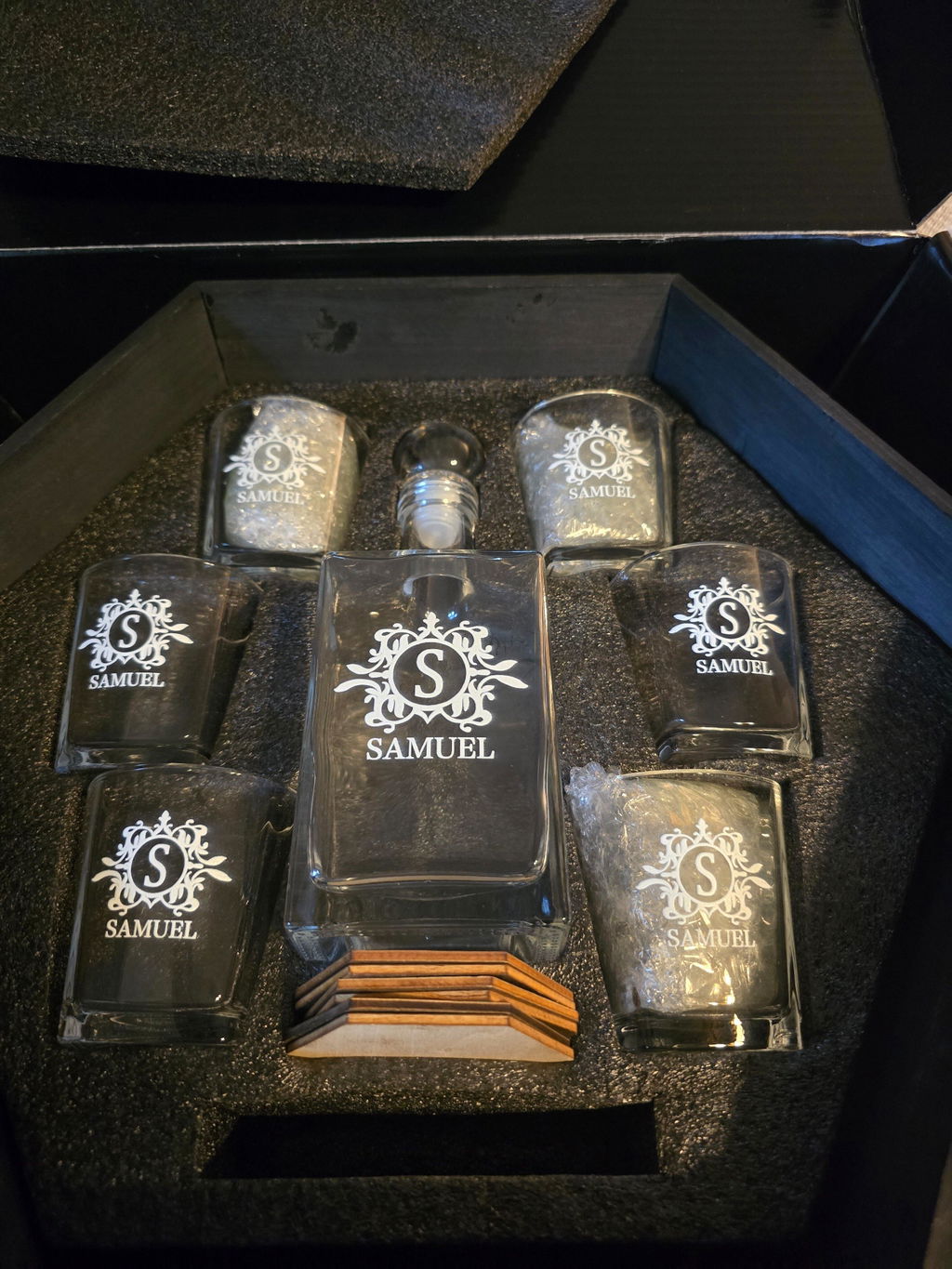
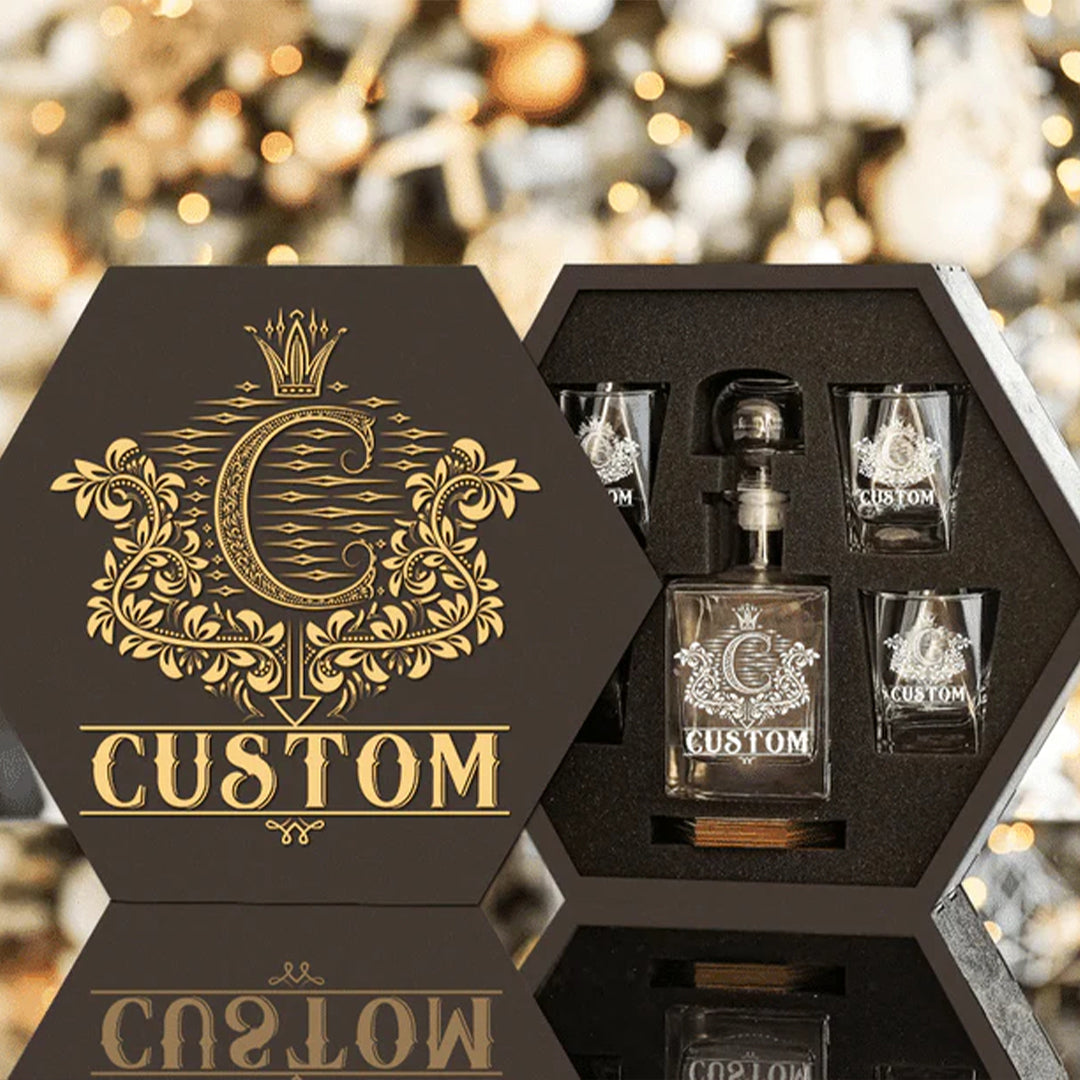
A decanter does exactly that. It elevates the ritual of pouring, enhances the visual experience, and preserves the integrity of the whiskey. Modern decanters—like those offered by Myroyalcustom—combine the best of traditional design with contemporary features: airtight glass stoppers, premium materials, and the option for personalization.